Heavily coloured by Victorian concepts, our modern understanding of Christmas bears strong resemblance to the celebrations captured in Dickens’ novels, most obviously in his parable novella, A Christmas Carol.
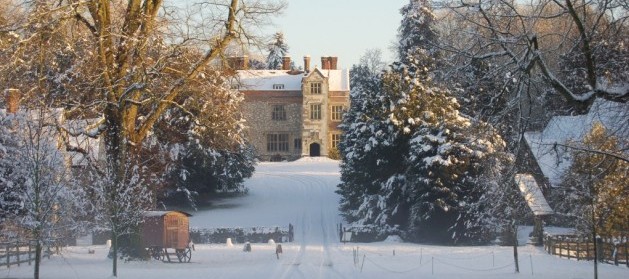
The Dickensian Christmas is a season for merriment and family: with crackling fires, leafy Christmas trees and a succulent goose trussed up for the table! But what if we were to picture Christmas through Jane Austen’s eyes and imagine how the season was celebrated in Georgian England? This winter Chawton House Library is doing just that with ‘A Georgian Christmas’ on Saturday 13th December!
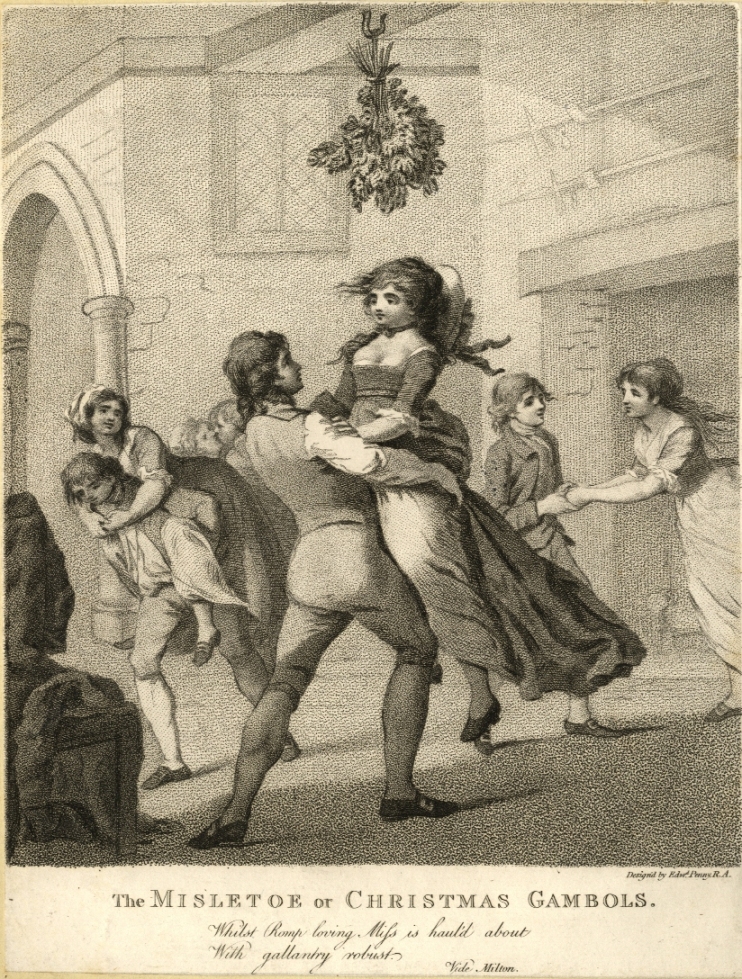
Christmas for the people of Jane Austen’s time had many similarities to the festive season of today, yet there were notable differences. In Georgian England Christmastide was much longer, beginning with St Nicholas’ Day on 6th December and ending with Twelfth Night on 6th January. The predominant feature of this celebration was gaiety. A poem from 1730 captures this sentiment perfectly, it states that:
‘Christmas is a coming,
We shall have flowing Bowls;
Dancing, piping, drumming’.
A letter written by Fanny Austen gives us an impression of this heady excitement and seasonal merriment. Describing their Christmas Eve party she writes:
‘in the evening we had (to us) a delightful ball Austen’s novels also show Christmas as a ‘party season’. In Emma the principle characters are invited to an evening entertainment at Randalls. It is after this entertainment that, buoyed by the merry atmosphere and fine wine, Mr Elton proposes to Emma, dashing her hopes of making a match between him and her young protégé, Harriet. Of all Austen’s novels, Persuasion paints the clearest and merriest picture of the season’s festive habits. Describing a scene at the Musgrove’s Austen writes: ‘On one side was a table occupied by some chattering girls, cutting up silk and gold paper; and on the other were tressels and trays, bending under the weight of brawn and cold pies, where riotous boys were holding high revel; the whole completed by a roaring Christmas fire, which seemed determined to be heard, in spite of all the noise of the others.’ This scene highlights the centrepiece of Georgian Christmas decorations – the Yule log. Rather than the chocolate cake we know today, this was a real log chosen for its great size. Wrapped with hazel twigs, it was set to burn throughout Christmas Day and there was a tradition to keep a piece of the log back to light the following year’s fire. The roaring fire was just one part of the Georgian’s Christmas decorations. Greenery such as holly and evergreen, along with kissing boughs of holly, ivy, mistletoe, and rosemary, were put up on Christmas Eve (it was unlucky to decorate any earlier!). This greenery was dressed with spices, apples, oranges, candles, and ribbons. The Christmas tree, which forms such a large part of our Christmas today, only became popular in 1848 under Queen Victoria’s reign. However, it has been speculated that Queen Charlotte introduced Christmas trees to the English court in 1800. You can find out more at Chawton House Library, where you might get to see a tree in the Staircase Hall! The Musgrove’s Christmas party also showcases the Christmas feast Austen’s contemporaries enjoyed. On Christmas Day families attended church before returning to a celebratory meal of turkey, goose, or venison, followed by plum pudding. Although this pudding had been banned by the puritans under Oliver Cromwell, it became a popular festive tradition after being served to George II in 1714. Food historian Dr Annie Gray (as featured on The Great British Bake Off) will be talking about Georgian Christmas food on the 13th December. In Jane Austen’s time, St Nicholas’ Day (6th Dec.), St Stephen’s Day (26th Dec) and Twelfth Night (6th Jan) were just as important as Christmas Day itself. Gifts were exchanged between friends on St Nicholas’ Day and on St Stephen’s Day families gave to charity and presented their servants with Christmas boxes filled with cake, money, and clothing. It is this tradition that led to the modern label ‘Boxing Day’. Twelfth Night, otherwise called the feast of Epiphany, marked the end of the festive season and was celebrated with feasting, dancing and gaming. On this night partygoers drank wassail (spiced wine or brandy garnished with apples) and ate Twelfth Cake. Samples of this earlier version of our Christmas cake will be available to taste at Chawton House Library. At the end of Pride and Prejudice, Lizzie writes to the Gardiners and insists that they ‘are all to come to Pemberley for Christmas’. Following in this tradition, we’ll end by insisting that you must all come to Chawton House Library for Christmas and see for yourself how the season was celebrated in Georgian England! By Chawton House Library interns, Hazel Barry-Scott and Amy Clarke. Tickets for the Georgian Christmas are £8 or £15 for a family of two adults and up to three children. The house will be open from 10 am to 3 pm and a talk, refreshments and Georgian food to taste are included in the ticket price. You can book tickets here, call Chawton House Library on 01420 541010 or simply buy a ticket at the door.