
We are delighted to announce this year’s six Visiting Fellows, who will join us over two 4-week cohorts in August and November.

 This year, we have awarded one British Association of Romantic Studies Fellowship, with the generous support of BARS, as well as five Chawton House Fellowships, including the Deirdre Le Faye Fellowship for Austen scholarship. These Fellowships have been made possible by the continued support of the Ardeola Charitable Trust.
Summer Cohort
Jemima Hubberstey (Historic Royal Palaces)
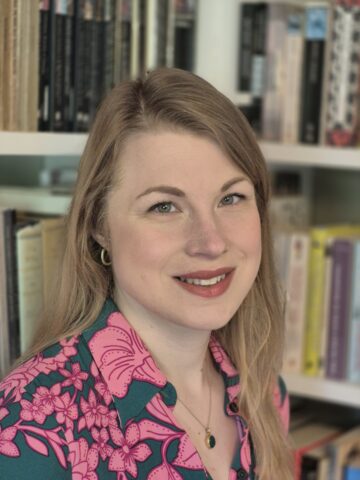
‘Creativity and Friendship within the Georgian Court in the late Eighteenth Century’
My project explores the network of female writers, intellects, and artists that were a key part of the household of Queen Charlotte (1744-1818) in the late eighteenth century, which included Mary Delany (1700-1788), Frances Burney (1752-1840), and Lady Charlotte Finch (1725-1813). While court life came with its own etiquette and expectations – a theme that surfaces frequently in the journals of Fanny Burney, who served as Second Keeper of the Robes to Queen Charlotte, this project seeks to explore how far there was also opportunity for women at court to share in creative pursuits, evidenced through their gift exchanges, including the unpublished manuscript, Mariana, now in the Chawton House collection, which Delany gifted to Queen Charlotte.
During my Fellowship, I will draw on the extensive materials in the Chawton House library to gain a deeper understanding of the intellectual and creative friendships in the late Georgian court, expressed through literary exchange as well as shared artistic and craft activities.
*
Olivia Wrafter (University of Cambridge), BARS Fellow
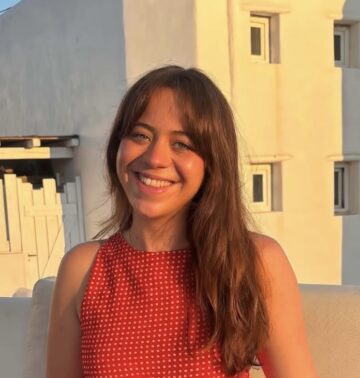 During my time at Chawton I will carry out research for the introductory chapter of my PhD thesis, ‘Death and the Philosophical Novel in the Long Nineteenth Century’, which interrogates the historical move towards literary-philosophical narratives of death across the period. I make the case that this is a distinctly female idiom: unlike the sensational or tropedeath scenes of male authors like Wilkie Collins and Charles Dickens, the female authors in my thesis are the first to instead articulate death within realist conventions, through ways in which speak to an intellectual concern with death and dying. Central to this research will be Chawton’s Minerva Press collection, which I will examine to ascertain the ways in which the melodramatic or gothic portrayals of death in Minerva’s so-called ‘Horrid Novels’ are jettisoned by later novelists. I am also interested in the legacy of the European gothic and will spend time looking at Chawton’s trove of women’s continental travel writing. Much of my research attends to the influence of heterodox theologies during the period, and I am particularly interested in studying the presentation of Protestantism and Roman Catholicism in these writings.
Ivette Constans (Universitat Autònoma de Barcelona)
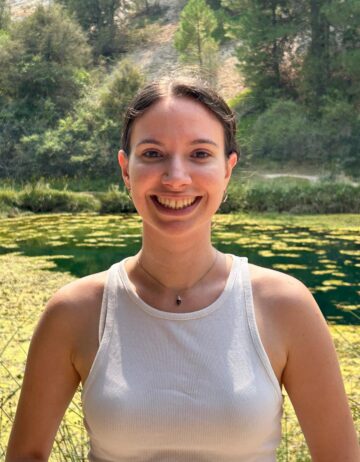 My research at Chawton House is based on my doctoral thesis, which explores the evolution of natural symbolism from the juvenilia of Anne and Emily Brontë to their major novels. In particular, I focus on how the sisters employed natural elements as a hallmark of the Romantic female aesthetic, emphasizing the natural world as a political means to navigate trauma and critique the constraints imposed on women and nature by patriarchal and colonial structures. Part of my research will focus on the representation of flora in botanical texts, estate descriptions, and gardening manuals. I will also examine how natural elements are employed across texts by Felicia Hemans, Mary Robinson, Jane Austen and Letitia Elizabeth Landon to explore how the presence of these elements articulates female identity and portrays a partnership between women and nature. Finally, I will explore Tony Yablon’s rare collection of Brontë scholarship, focusing on sources that illuminate the sisters’ juvenilia. By analysing how critical perspectives identify Charlotte Brontë’s authorial positioning and how her unrecorded letters might enhance this, I hope the research I carry out will lead to a fuller understanding of how Charlotte’s conceptualization of herself and of her sisters has shaped the reception of Anne and Emily, their juvenilia and their use of natural imagery.
Winter Cohort
Kerry Parker (University of Southampton),
 At Chawton House, I will investigate how women writers of the Regency and early Victorian periods transformed the proto-feminist ideas articulated by Mary Wollstonecraft into sustained literary and political interventions concerning marriage and coverture as a system of women’s legal subordination. My research focuses particularly on Lady Charlotte Bury (1775–1861), whose novels adapted and intensified the critique of matrimony already embedded within Jane Austen’s fiction. In the reformist culture of the 1820s and 30s — a period often characterised as one of political retreat for women — Bury used her fiction to advance the arguments of activists for the amendment of marriage law and women’s legal status. Drawing on novels, conduct literature, manuscript material and the Knight collection, the project examines how women writers used fiction, periodicals and other literary forms to disseminate these arguments and shape public opinion in the years spanning the First Reform Act and beyond. More broadly, the project explores the collaborative networks linking figures such as Bury, Caroline Norton and Anna Wheeler, as well as the role of female literary culture in campaigns for the reform of marriage law and women’s legal rights in nineteenth-century Britain.
*
Shelby Knighten (University of Oxford), Deirdre Le Faye Fellowship

*
Noushin Ahdoot (Johns Hopkins University)
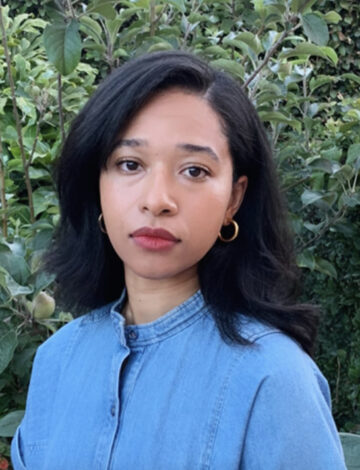
During my time at Chawton House, I will develop my dissertation chapter on Jane Collier and Sarah Fielding’s The Cry (1754). In my study of The Cry, I examine the novel’s treatment of two competing forms of female subjectivity: one which might be associated with concept of “the beautiful soul,” a morally superior subjectivity susceptible to a threat of antisociality and inwardness, and another which might be associated with the Schlegelian concept of “the interesting,” a morally precarious subjectivity susceptible to a threat of hedonism and the anti-social expression of the passions. While these forms of subjectivity stand in conflict with society, The Cry (itself the product of writerly collaboration between women) also models successful forms of intersubjectivity—the fellow-feeling found in female friendship and the formation of a dialectical female self-consciousness. This chapter will consider the commonplace book as offering a model for intersubjectivity that The Cry emulates in its collage-like form and dialectical content. I will consult the library’s collection of women’s commonplace books, scrapbooks, and journals, as I develop an understanding of how personal and intellectual assemblages contributed to the formation of the modern female subject.