Sunday 21st November 2021
Venue: Chawton House
Join us in the Great Hall, 3.30pm-5.30pm for performances of Fanny Mendelssohn-Hensel and Franz Schubert, prefaced by a talk from Jeremy Neville.
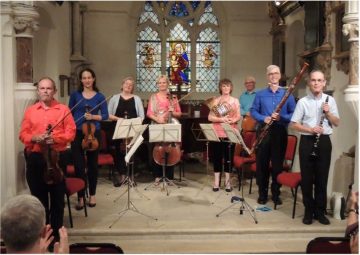
Formed in 2015, the Nall Ensemble features the principal players from the Ealing Symphony Orchestra including its leader, Peter Nall. They play regularly as part of the full symphony orchestra and separately as a chamber group. After a highly successful inaugural concert, the ensemble went on to play in four successive performances at the Art in Action festival at Waterperry near Oxford.
The players are based in and around London, with two of them in Hampshire (including one in Alton). The ensemble plays in different formations, and today will be seen as a quartet as well as the full octet.
The Nall Ensemble is delighted to be playing at the place Jane Austen called the ‘Great House’, and particularly pleased to be able to include a piece by a female composer, in keeping with the aims and objectives of Chawton House, to promote the lives and works of women writers.
Fanny Mendelssohn-Hensel: String Quartet in E Flat Major (2 movements)
- Adagio ma non troppo (Adagio is a slow tempo, often implying a lyrical, poignant character)
- Allegro molto vivace (Allegro is fast; vivace denotes a brisk, lively tempo faster than allegro)
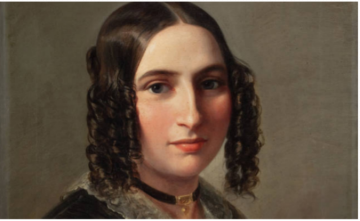 Fanny Mendelssohn (1805 – 1847)
The older sister of Felix Mendelssohn, best known for his ‘Wedding March’, Fanny Mendelssohn-Hensel was one of the 19th century’s most brilliant composers, recognised as a prodigy at an early age. However, like so many talented women of her time, her gifts were not taken seriously; she was never to experience real success and was soon eclipsed by her younger brother.
Fanny Mendelssohn-Hensel wrote over 460 pieces of music, including this sparkling quartet, composed in 1834, and in common with many composers she wrote several books of solo piano works. She published her first work under her own name in 1846 but died only a year later from complications following a stroke.
Franz Schubert: Octet in F Major, Opus D803
- Adagio – Allegro – Più allegro (slow opening, faster and then even faster to finish)
- Adagio (slow)
- Allegro vivace – Trio – Allegro vivace (very fast, trio of three instruments, then very fast to finish)
- Andante – variations. Un poco più mosso – Più lento (walking pace, with variations on a theme, moving more quickly then back to slow)
- Allegretto – Trio – Menuetto – Coda (played as minuet, faster, then trio, repeated minuet and final theme)
- Andante molto – Allegro – Andante molto – Allegro molto (slow walking speed, then quick, back to walking speed and then ending with a final flourish)
 Franz Schubert (1797 – 1828)
Schubert, who was a contemporary of Fanny Mendelssohn (and of Jane Austen), wrote his Octet in 1824, just four years before his tragically early death. It comes from the same period as two of his other major chamber works: the string quartets, ‘Rosamunde’ and ‘Death and the Maiden’, but was not fully published until as late as 1889 when his music was championed by Johannes Brahms.
At the time he wrote it, Schubert was in poor health, both physically and mentally. In 1823 he had been diagnosed with syphilis, which would prove to be fatal five years later. The disease produced extreme depression, alternating with periods of ‘remission’ and lifting of his spirits. As a result the work is both dark and dramatic and highly lyrical in tone, alternating between the two. It includes themes from his other works that a contemporary audience would surely have recognised.
The dark mood is set immediately in the opening bars with suspended notes on the wind instruments but goes on to include many lighter moments in the fast section that follows. The clarinet features heavily in most of the movements, mainly because the piece had been commissioned by Count Ferdinand von Troyer, an accomplished clarinettist himself. One movement appears to feature music from a Viennese coffee house, and another consists of a theme with a set of ‘variations’ that repeat the same theme in both ‘light and dark’ ways.
This octet is longer than many such chamber pieces and unusual in its combination of five string and three wind instruments, but this combination produces a richness and depth of sound that makes it one of the grandest, most popular, and enjoyable chamber pieces for both players and audience alike. It takes almost an hour to perform, so settle in and let its ‘sound world’ take you over!
The Nall Ensemble
1st Violin: Peter Nall
2nd Violin: John Martin
Viola: James Greener
Cello: Rachael Bucknall
Double Bass: Martin Jones
Clarinet: David Weedon
Horn: Pamela Wise
Bassoon: Gary Walker
£15 per ticket