
 At Chawton House Library sits a rather special piano, on loan from the University of Southampton, our concert series partner. We caught up with the university’s Head of Keyboard Studies, Professor David Owen Norris, to find out more about the ‘angel’ of musical instruments.
What is so special about the Stodart piano at Chawton House Library?
Interestingly, it’s an 1828 Stodart grand piano with what’s called a patented compensating mechanism, where the strings are made from iron and brass and the piano frame is braced with a network of brass tubes and wooden struts, which helps prevent pitch fluctuation caused by temperature changes. In other words, it’s more likely to stay in tune when a room heats up!
What does the piano feel like to play?
The beauty of this piano is that it has a very subtle and responsive action so it is a great joy to play and, in particular, the left hand pedal (which we sometimes call the soft pedal) moves the keyboard enough to get down to only one string per note, which creates the most extraordinary sound. It’s very, very pure, like an angel speaking to you.
In early literature, such as Jane Austen’s novels, the piano is a focal point in society gatherings. Why is that?
Women used music not only as entertainment but also as a courting ritual and for intellectual satisfaction. Although women had previously played the harpsichord, which was the precursor to the piano, the female exploitation of keyboard instruments became more noticeable once the piano came along in the later eighteenth century.
That’s partly because the piano has certain attributes that the harpsichord lacks. You can make a more satisfyingly full sound with the pedal and the chief use of the piano in the early 1700s was to accompany voices, but it’s also got something to do with the growing wealth of society and the fact that the piano was an object of luxury and a status symbol and therefore something to be prized.
How has the piano evolved over the last few centuries?
It’s interesting to see how the piano has developed to suit different strata of society – and pockets! The first pianos that became available in England in the middle 1760s were what we now call square pianos, although they were actually rectangular. Back then they were called pianoforte or fortepiano and considered a luxury.
By 1771, something more akin to the harpsichord in size and shape reached London from Italy, Germany and elsewhere, which was dubbed the grand piano. Around that time, however, demand grew for a smaller piano to suit smaller homes so they turned back to the square pianos. As the 19th century developed, the square piano was considered too large for some tastes and budgets and the upright piano was invented, which was often called a ‘cottage piano’ and is your clue to the sort of market it was aimed at.
What sort of piano might Jane Austen have played?
It’s possible that Jane Austen in her house in Chawton village (now the Jane Austen House Museum) may have had a square piano and entirely likely that her brother, Edward Knight, who owned Chawton House itself, was probably wealthy enough to have a grand piano.
Music at Chawton House Library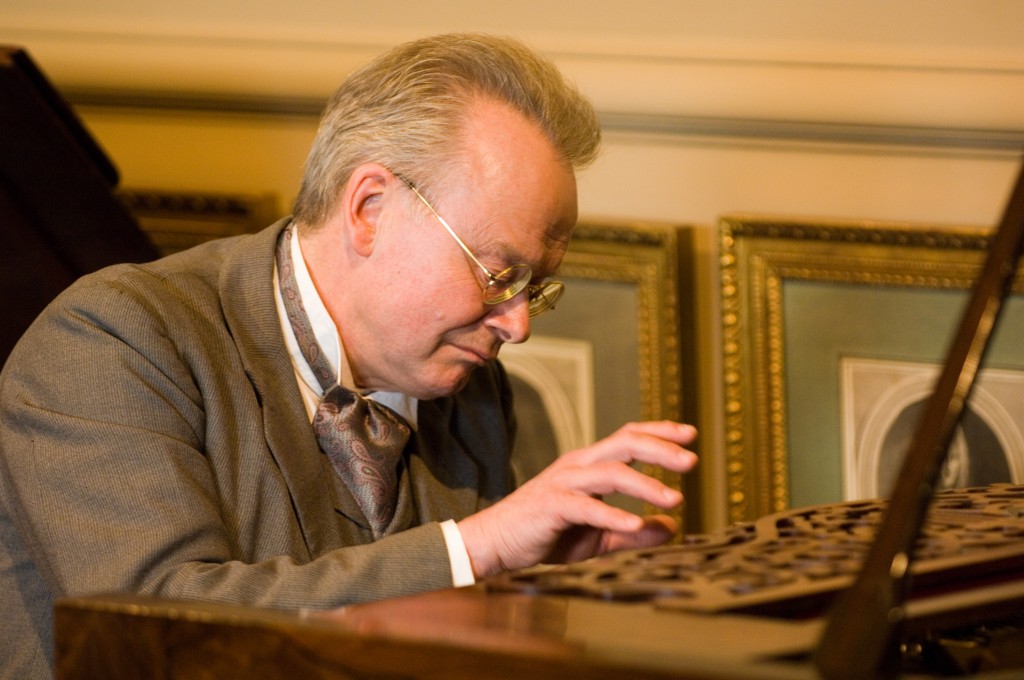
The Stodart grand piano is the inspiration behind bringing music to Chawton House Library in collaboration with the University of Southampton.
On Tuesday 9th December we are celebrating an evening of Georgian piano music, with David Owen Norris and pianists from the University of Southampton. In the magical setting of the ‘Great House’ they will perform music by Cramer, the only composer named in Jane Austen’s novels.
Tickets cost £15 (or £12.50 for students or friends of Chawton House Library) and include drinks and canapés. For more information and to buy tickets call 01420 541010 or follow the link